 |
|
|
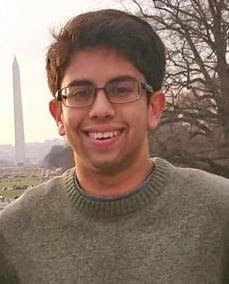
ECE Junior Tejas Guha |
|
Tejas Guha, also a junior in Electrical Engineering (with a minor in Robotics and Autonomous Systems), was recently published as first author on a paper titled “Generating colorblind-friendly scatter plots for single-cell data” in the journal eLife. He completed the research for this paper while working at a bioinformatics oncology lab at the Johns Hopkins School of Medicine. The work discusses creating accessible visualizations in bioinformatics research.
As Guha explains, “In biomedical research, visualizations are an ubiquitous tool used to decompose and understand complex patterns in biological systems. One common type of visualization is the scatterplot; however, unlike in many other fields, scatterplots in biological research often contain twenty to fifty groups of data that must be visualized at once to fully encapsulate an entire mechanism. The multitudes of groups within a single scatterplot pose a significant issue in its accessibility to colorblind researchers. With only shades of color used to distinguish each group, it becomes difficult for colorblind and even normal color perceiving researchers to correctly interpret scatterplots in biomedical research. I solve this problem by developing a novel algorithm and software package that easily generates scatterplots using 'hatching patterns' along with color. Thus, groups of data within a scatterplot can be distinguished by texture created using closely spaced lines. This technique circumvents the accessibility issue of scatterplot visualizations in biomedical research by mitigating its reliance on color as a distinguishing factor. The algorithm and software package created can be easily modified to and applied to any other field where people with color deficiencies must visualize multivariate data."
Currently, Guha is working with ECE Professor Jonathan Simon on computational neuroscience research focused on using Magnetoencephalography (MEG) data to predict auditory effort using heart rate variability. This research will be applied to his final undergraduate thesis.
Read the full article
March 13, 2023
|




